
Words That Rank and Convert
SEO content that passes AI detectors, reads like a human wrote it, and ranks on Google. Here’s how Pixora Digital delivered end-to-end content strategy and writing for a high-volume USA packaging brand.
USA-based custom packaging e-commerce brand · Ongoing content partnership
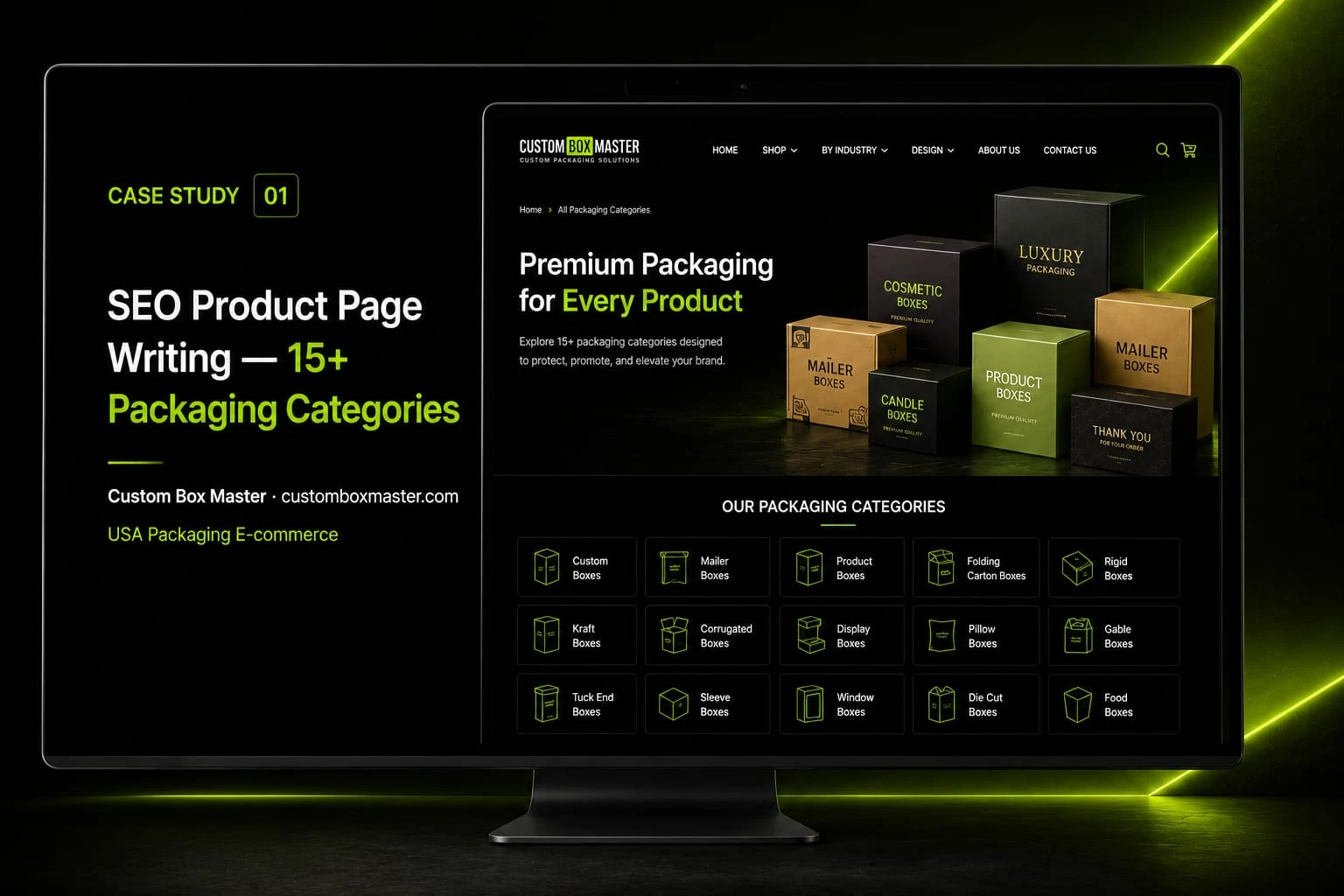
SEO Product Page Writing — 15+ Packaging Categories
Custom Box Master · customboxmaster.com — USA Packaging E-commerce
Existing pages thin — 300–400 words with no keyword structure
H1/H2/H3 heading hierarchy inconsistent across pages
Primary keywords missing from meta titles, H1s, and first paragraphs
No internal linking between related product pages
Tone was flat and generic — no emotional hooks for buyers
AI-generated content flagged 70–85% on detection tools
- 1Keyword Research Per Category
Identified primary keyword, 3–5 LSI keywords, and buyer-intent long-tails for each product category before writing a single word.
- 2Heading Structure Planning
Built an H1 → H2 → H3 structure for every page before writing — ensuring keyword placement was strategic, not accidental.
- 3Buyer-First Copywriting
“Your cookies deserve packaging that sells them before anyone takes a bite” — not “We offer custom cookie boxes.”
- 4SEO Optimisation
Primary keyword in H1, first 100 words, at least 2 H2s, and meta description. Keyword density kept within 1.5–2.5% per page.
- 5Humanisation Pass
Every page went through a final humanisation pass — varying sentence length, adding conversational phrases, removing robotic patterns.
- 6Internal Linking
Each page cross-linked to 2–3 related product categories using natural anchor text — building topical authority across the catalogue.
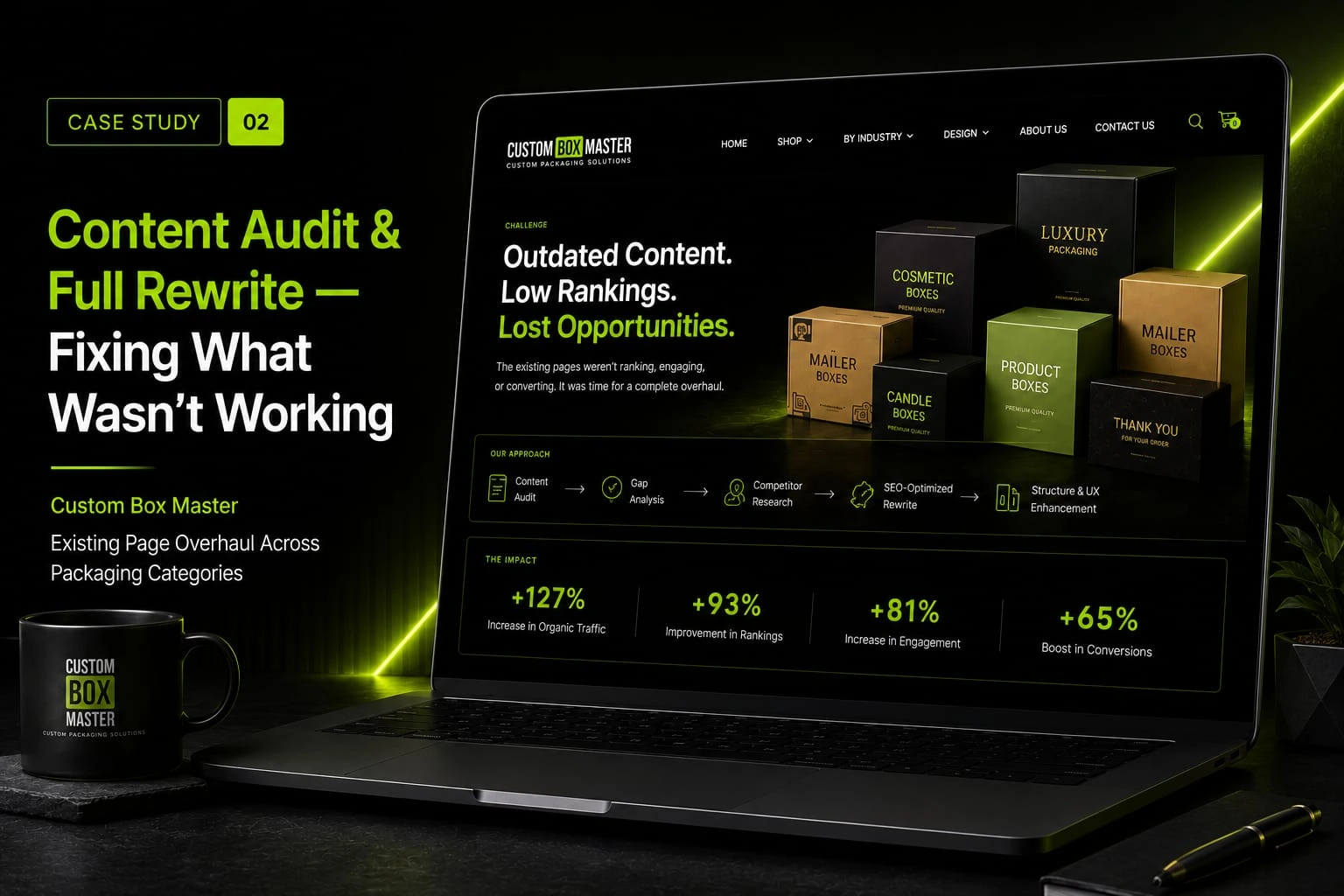
Content Audit & Full Rewrite — Fixing What Wasn’t Working
Custom Box Master — Existing Page Overhaul Across Packaging Categories
Primary keyword absent from H1 — rankings suppressed from the start
First paragraph buried keyword below the fold
H2 and H3 subheadings descriptive but not keyword-optimised
AI detection scores between 75–85% — risked Google quality penalties
Tone too formal and catalogue-like — no buyer connection
Zero internal links — each page was an orphan in the site structure
- 1Formal Brief Audit
Each page reviewed against the original brief — checking word count, keyword placement, heading structure, tone, and internal linking.
- 2Failure Report Per Page
“H1 missing primary keyword. First paragraph introduces product without buyer context. No H3 used. AI score: 78%. Zero internal links.” — Directive, not subjective.
- 3Structure Rebuild
Rebuilt the heading hierarchy from scratch — H1 with exact-match keyword, H2s targeting secondary queries, H3s for supporting detail.
- 4Full Content Rewrite
Rewrote every page completely — not edited, not patched. Fresh copy, buyer-first openings, natural keyword integration.
- 5Humanisation & Detection Testing
Each rewritten page tested on AI detection tools before delivery. Only pages scoring below 5% AI probability were submitted.
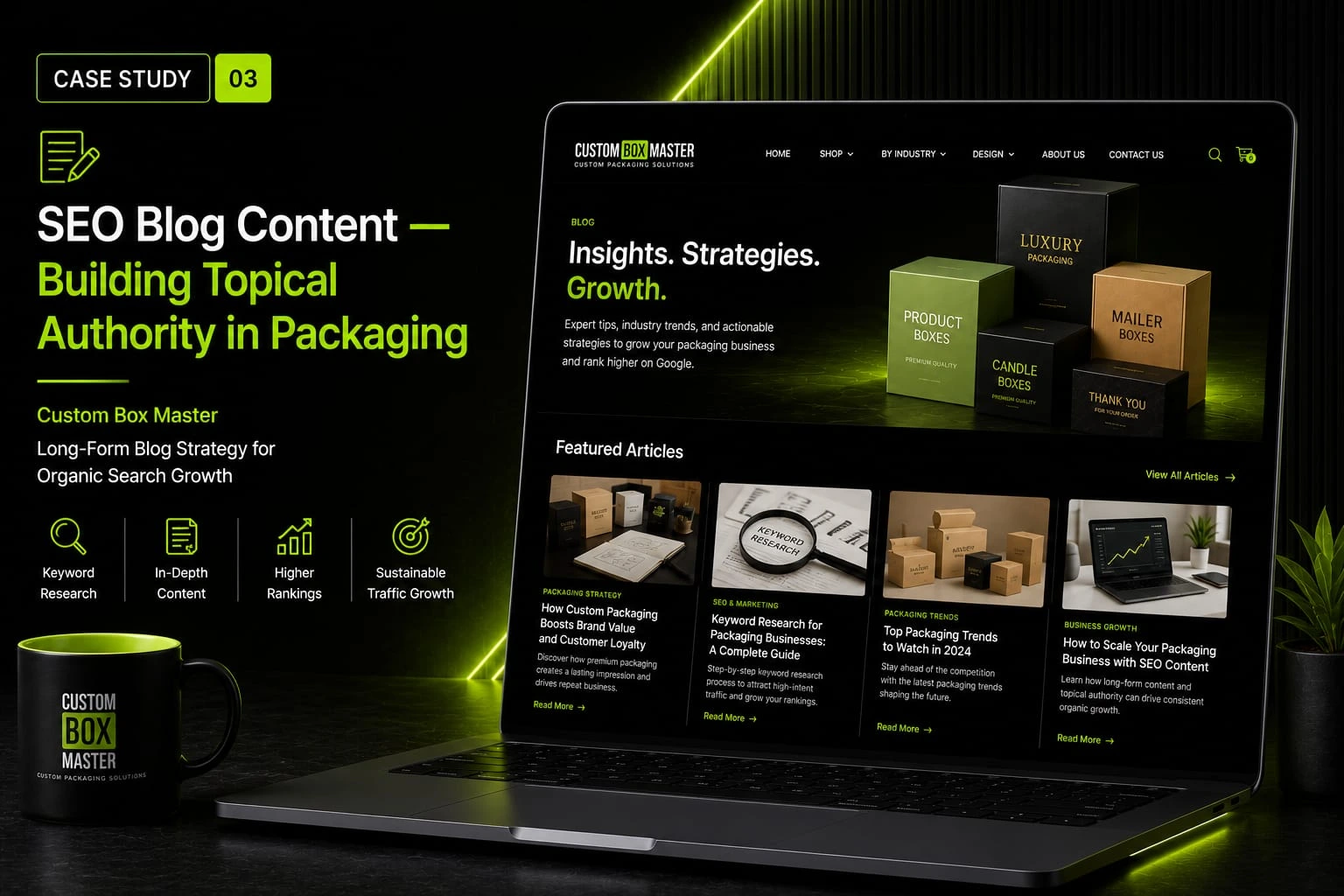
SEO Blog Content — Building Topical Authority in Packaging
Custom Box Master — Long-Form Blog Strategy for Organic Search Growth
- 1Keyword & Topic Mapping
Identified topics based on search volume, buyer intent, and gaps — ensuring no two blogs competed for the same keyword.
- 2Search Intent First
Before writing, identified whether each query was informational or comparison-intent — and structured the blog to match exactly.
- 3Outline Before Draft
Every blog was outlined — H1, H2s, H3s, estimated word count per section — and reviewed before a full draft was written.
- 4CTA Integration
Every blog ended with a natural CTA linking to the most relevant product category — turning informational readers into potential buyers.
Every blog targeted a specific informational or comparison query
Introductions answered the query within the first 150 words
H2 and H3 structured around questions buyers actually type into Google
Each blog linked to 2–3 relevant product pages — moving readers toward purchase
Varied sentence length kept AI detection scores below 5%